

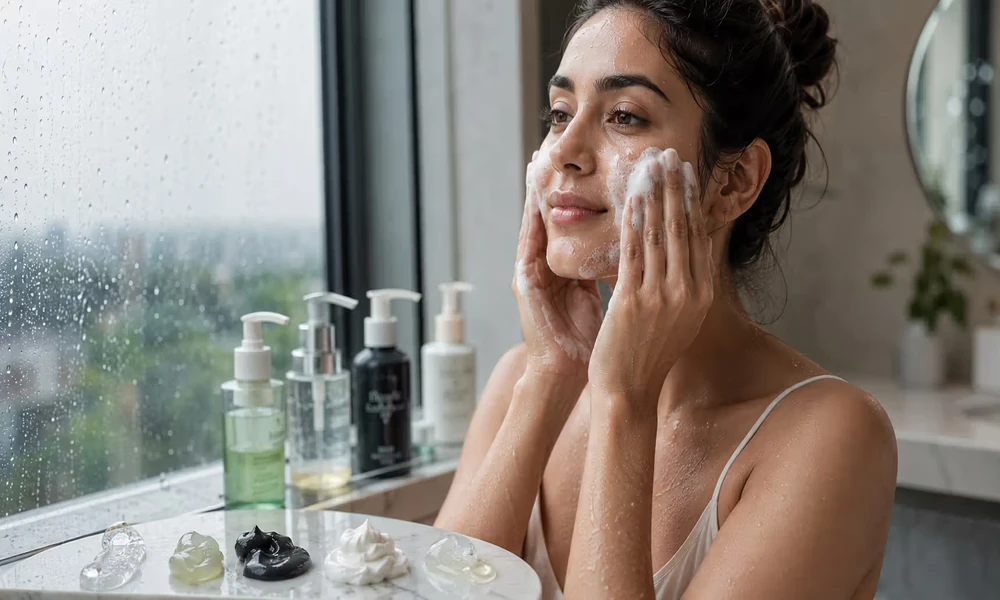
That pulled, papery feeling after rinsing isn’t proof of cleanliness. Instead, it signals a barrier losing water by the minute. Oily and dry complexions can both experience it. Harsh surfactants dissolve the lipids that lock hydration in place. A mild Daily Face Cleanser removes grime while sparing those lipids. Formula pH matters too, as does water temperature. Even the minutes after drying play a role. Small adjustments here can end that stretched sensation.
Tightness Starts With Stripped Barrier Lipids
Skin’s outer layer resembles a brick wall of cells. Ceramides, cholesterol, and fatty acids serve as mortar. Aggressive cleansers rinse that mortar away alongside dirt. Water then escapes faster through the gaps. Dermatologists call this transepidermal water loss, or TEWL. Once it rises, the surface shrinks slightly and feels taut.
Why Do Some Cleansers Feel So Harsh?
Harshness traces back to a few predictable culprits.
- Sodium lauryl sulfate binds tightly to skin proteins.
- Alkaline bar soaps raise surface pH above 9.
- Synthetic fragrance can irritate an already weakened barrier.
- Gritty scrub particles scrape away protective oils.
Healthy skin sits closer to pH 5. Alkaline washes upset the enzymes that rebuild lipids.
Gentle Formulas Rely on Milder Surfactants
Mild washes swap sulfates for gentler cleansing agents. Decyl glucoside and cocamidopropyl betaine are common choices. Both loosen sunscreen and sebum without dissolving barrier fats. Glycerin, ceramides, or niacinamide often round out the formula. A well-built Daily Face Cleanser also lands near skin’s natural pH. Cream and milk textures leave behind a faint, comfortable film.
Does Water Temperature Change the Result?
Hot water melts surface lipids the way heat softens butter. A steaming rinse may feel refreshing, yet it accelerates moisture loss. Lukewarm water, close to body temperature, protects the barrier far better. Duration counts as well. A wash of thirty to sixty seconds is plenty. Longer sessions give surfactants extra time to strip oils.
What Should Happen Right After Rinsing?
Post-wash minutes decide how much water stays put.
- A soft towel should pat, not rub.
- Moisturizer works best on damp skin.
- Ceramide or squalane creams rebuild lipids.
- Alcohol-heavy toners deserve a pass.
- Thick balms can seal very dry patches.
Damp skin traps water beneath the cream’s protective layer.
The Squeaky Rinse Is a Warning
For decades, a squeaky rinse signaled a job well done. In truth, that friction means barrier mortar has dissolved. A bar soap near pH 9 produces the squeak fastest. Comfort should replace that sound as the new benchmark. Soft skin ten minutes after drying means lipids survived.
FAQs
Can oily skin still feel tight after washing?
Yes, oily skin can produce excess sebum while still lacking water. Harsh washes may also spark rebound oil production later in the day.
Is a cleansing oil gentler than a foaming wash?
Oil cleansers lift makeup and sunscreen with less disruption to barrier lipids. Following one with a low-pH gel removes any lingering residue.
How often should the face be washed each day?
Twice daily suits most faces, with the evening wash mattering most. Very dry or sensitive skin may need only lukewarm water each morning.
When does tightness signal a medical concern?
Persistent flaking, burning, or redness may point to eczema or dermatitis. A dermatologist can assess the barrier when gentle product swaps fail.
Are exfoliating cleansers safe for everyday use?
Daily washes with salicylic or glycolic acid can thin the barrier over time. Reserving them for two or three evenings a week keeps irritation and tightness in check.
Can hard water make skin feel tighter?
Calcium and magnesium in hard water react with soap, leaving a dulling residue on the surface. A syndet cleanser or a final rinse with filtered water limits that drying film.
