

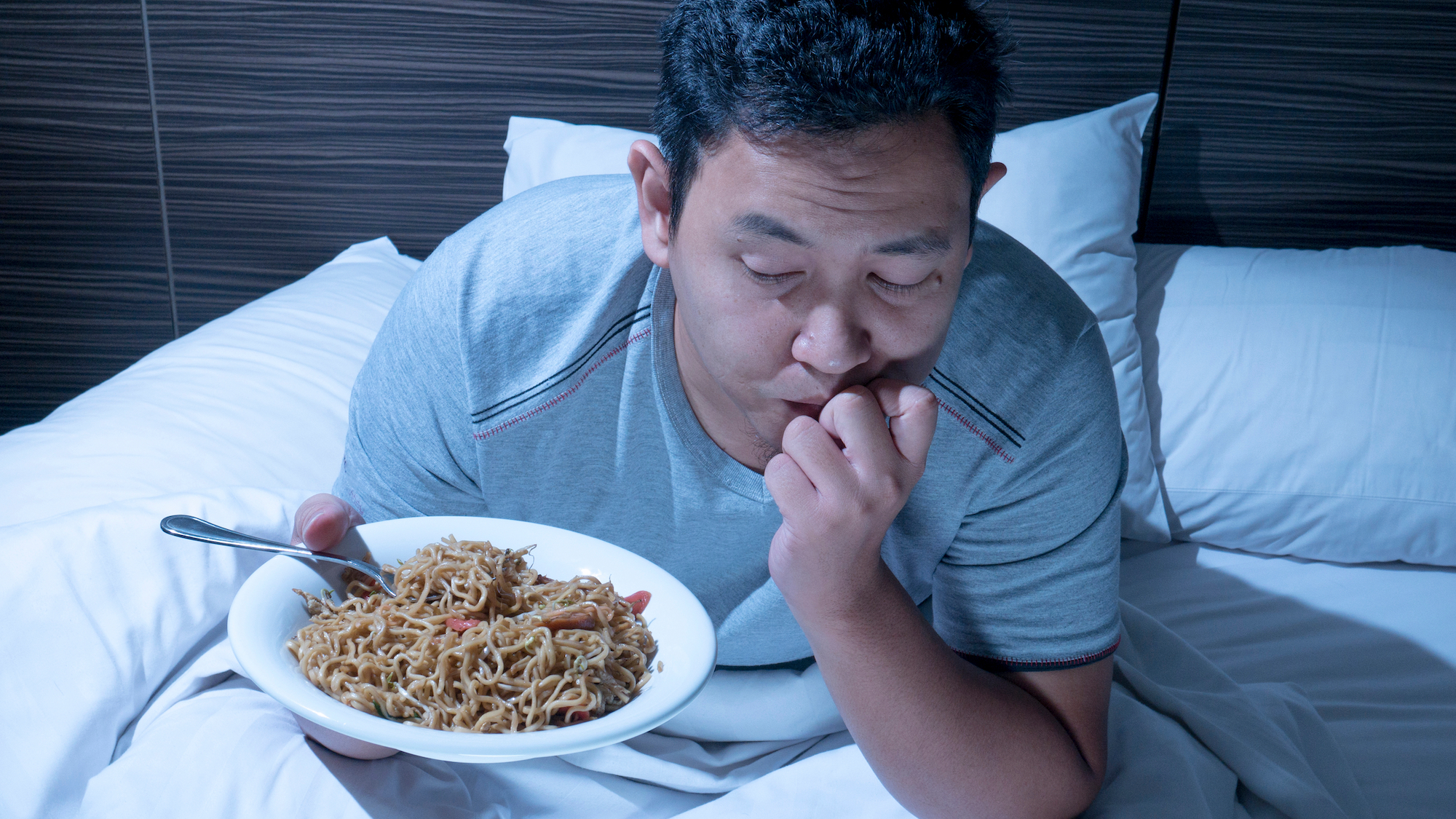
Eating Before Bed is often discouraged because “do not eat after 8 PM” is one of the most repeated diet rules out there. It gets passed down from parents, repeated by well-meaning friends, and sometimes even echoed by health magazines. But the timing itself is not always the real issue. What you eat often matters far more than what the clock says.
Eating before bed does not automatically cause weight gain. If your total calories for the day are within your needs, a snack at night won’t make you heavier. What late-night eating can affect is sleep quality, digestion, and blood sugar – and those effects depend heavily on what you’re eating and how long before sleep you eat it.
Where Did the ‘No Eating Before Bed’ Rule Come From?
The idea has some loose logic behind it. During sleep, your metabolism slows slightly and you’re not moving – so the concern was that any food eaten at night gets stored as fat rather than burned off. Early animal studies seemed to support this. But human research tells a more nuanced story.
The bigger culprit in late-night eating weight gain is usually what people eat (high-calorie, ultra-processed snacks) and why (boredom, stress, habit) – not the hour on the clock. Studies on shift workers and people who control their total intake have shown that meal timing has a much smaller effect on body weight than overall calories and food quality.
What Science Actually Shows
Research on late-night eating highlights a few consistent findings:
- Total daily calories is the dominant factor in weight change – not meal timing
- Eating within 2-3 hours of sleep can worsen acid reflux and disrupt sleep quality
- High-carb or high-fat meals before bed can elevate blood sugar and interfere with deep sleep stages
- Protein-rich snacks before bed may actually support muscle repair during sleep
- People who eat late tend to make worse food choices – more sugar, more fat, larger portions
Foods That Are Fine Before Bed vs. Foods to Avoid
| Good Before Bed | Why It Works | Avoid Before Bed | Why It’s Problematic |
| Greek yogurt | High protein, supports muscle recovery | Spicy food | Triggers acid reflux and heartburn |
| Banana | Magnesium and tryptophan aid sleep | Greasy / fried food | Slows digestion, causes discomfort |
| Almonds | Melatonin and healthy fats | Alcohol | Disrupts REM sleep despite feeling sedating |
| Oatmeal (small bowl) | Complex carbs, mild and filling | Caffeine (coffee, soda, chocolate) | Delays sleep onset significantly |
| Cottage cheese | Casein protein digests slowly overnight | Large pasta portions | Spikes insulin and causes bloating |
| Tart cherry juice | Natural melatonin source | Ice cream or sugary desserts | Blood sugar spike followed by crash |
Does Late-Night Eating Affect Sleep Quality?
Yes – but it depends on what you eat. Here’s what happens biologically:
- Heavy, fatty, or spicy meals trigger the digestive system to work overtime, making it harder to fall into deep sleep
- Foods high in simple carbs cause a blood sugar spike followed by a drop, which can wake you up in the middle of the night
- Alcohol might feel like a sleep aid but it suppresses REM sleep, leaving you groggy
- Protein and foods containing tryptophan (turkey, dairy, nuts) can actually support serotonin and melatonin production, helping you sleep better
The sweet spot is a light, balanced snack eaten 1-2 hours before bed – not a full meal, and not right as you’re pulling back the sheets.
Who Should Definitely Avoid Eating Before Bed
Some people genuinely need to skip late-night food regardless of how healthy it is:
- GERD or chronic acid reflux sufferers: Lying down after eating, even something light, can send stomach acid into the esophagus
- People with type 2 diabetes or blood sugar regulation issues: Late eating can disrupt nighttime glucose patterns
- Anyone with IBS or slow motility: The digestive system is less active at night; eating late can worsen symptoms
If you fall into one of these categories, a 3-hour eating cutoff before bed is genuinely worth following.
Smart Late-Night Snack Ideas (Under 200 Calories)
| Snack | Approx. Calories | Why It’s a Good Choice |
| Small bowl of oatmeal with honey | ~150 cal | Slow-digesting, contains melatonin precursors |
| Handful of almonds (15-20 nuts) | ~170 cal | Healthy fats, magnesium, melatonin |
| Greek yogurt (plain, 3/4 cup) | ~90 cal | High protein, probiotics, low sugar |
| Banana with almond butter (half) | ~130 cal | Potassium, tryptophan, stable energy |
| Tart cherry juice (small glass) | ~70 cal | Natural melatonin, anti-inflammatory |
The Bottom Line
Eating before bed isn’t the villain it’s been made out to be. The question isn’t whether you eat – it’s what you eat and how much. A banana and some yogurt at 10 PM won’t ruin your progress. A bag of chips, a pint of ice cream, and a glass of wine? That’s a different story – but the problem there isn’t the timing.
If late-night hunger is a regular thing, it might be worth looking at whether your daytime meals are satisfying enough. Often, the urge to snack heavily at night comes down to under-eating or under-fueling during the day.
