

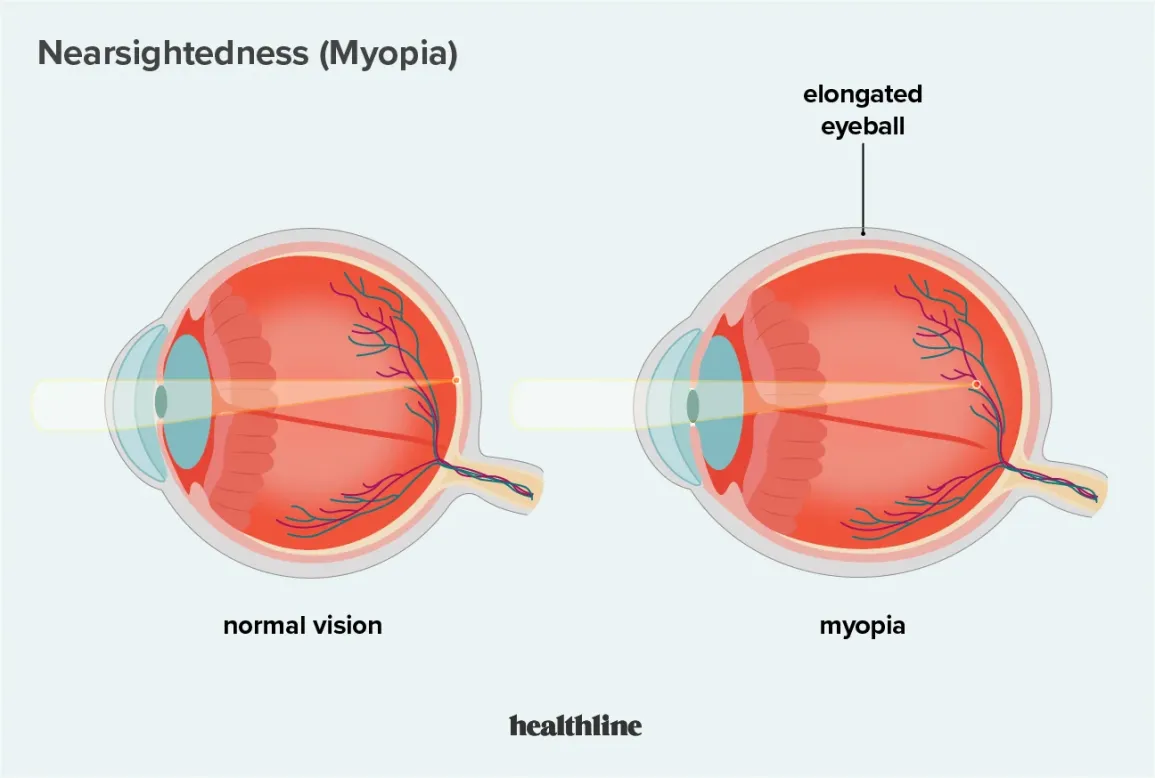
Typically, eye physicians who diagnose myopia (nearsightedness) in children prescribe eyeglasses or standard contact lenses. While these devices improve the child’s vision, they cannot stop the progression of myopia. Doctors today can help your child delay the progression of myopia and reduce the risk of developing vision-robbing ocular diseases later in life by employing the most advanced myopia management techniques.
This page will explain the various myopia treatment options and their associated advantages.
What is Myopia Control?
Myopia begins in childhood, and if its progression is not delayed, a child can develop extreme nearsightedness by the time they reach early adulthood. It is not a static circumstance. By the time you take your child in for their next eye exam, their nearsightedness will likely have worsened.
Myopia increases the risk of developing eye diseases such as glaucoma, cataracts, retinal detachment, and macular degeneration. Therefore, myopia management aims to slow down its progression. The risk increases as the progression of myopia increases. Even for moderate myopia, the earlier your child begins myopia management, the greater the benefits.
What Myopia Management Treatment Methods Are Available?
Ortho-K/Orthokeratology
Ortho-k has been shown to substantially reduce the rate of myopia progression by delicately reshaping the cornea with a customised, overnight-wearing contact lens. By morning, the corneal elongation that causes myopia is considerably diminished. In addition, this transient reshaping provides clear vision without the need for spectacles or contact lenses the following day.
Atropine Drops
Atropine is a drug that can be used to treat a variety of conditions and complications. Today, it is most frequently used to dilate the pupils prior to specific eye exams.
Recent research indicates that atropine eye drops in modest doses can effectively halt the progression of myopia in children. In addition, myopia progression can be slowed when atropine eye drops are administered at bedtime over an extended period of time.
Because atropine does not rectify vision, optometrists frequently prescribe the drops in conjunction with eyeglasses and as a supplement to other myopia management strategies.
Multifocal Lenses
Multifocal contact lenses are known to be extremely comfortable and correct higher levels of myopia. They provide distinct central and peripheral vision, and many individuals do not even sense them on.
Multifocal contact lenses improve peripheral vision by correctly focusing light on the retina in all areas. The centre of the contact lens enables the wearer to focus on distant objects that appear blurry to a person with nearsightedness. In contrast, the outer zone enables the wearer to see near objects more distinctly.
How Do You Select the Appropriate Myopia Treatment?
If your infant has myopia, it is recommended that they undergo some form of myopia management. The suitability of orthokeratology or multifocal lenses for a child depends heavily on their age, maturity, and lifestyle. In general, adolescents can begin wearing contact lenses at age 8.
One factor to consider is the degree of myopia. If the level of refraction is excessively high, corneal reshaping may be less effective. Consult your nearest physician to determine if ortho-k can be used to manage your child’s prescription.
Lifestyle is a significant factor to consider. For example, a child who enjoys playing outside may find eyewear or dirt environments bothersome when wearing contact lenses. Ortho-k is most likely the best option for these individuals.
Consider atropine drops if you choose a corrective solution (glasses or contact lenses). They are ideal for infant children and have minimal adverse effects.
